Honey 🍯 : Nature’s Timeless, Remarkable Sweetener
(Image 1 suggestion: Soft, scenic wide shot – Ancient Egyptian pyramid archaeological still, calm lighting, evoking the 3,000-year-old honey discovery from pyramid tombs)
When we think of honey, most of us simply dismiss it as “the sweet stuff made by bees”—a humble, golden syrup we drizzle on toast or stir into tea. But there is far more to honey than meets the eye. It is a marvel of natural engineering, a food unlike any other on Earth, with a story that spans thousands of years of human history and holds unique secrets in its composition. To understand honey is to appreciate one of nature’s most perfect, unprocessed gifts, from the intricate work of honeybees to its extraordinary ability to stand the test of time.
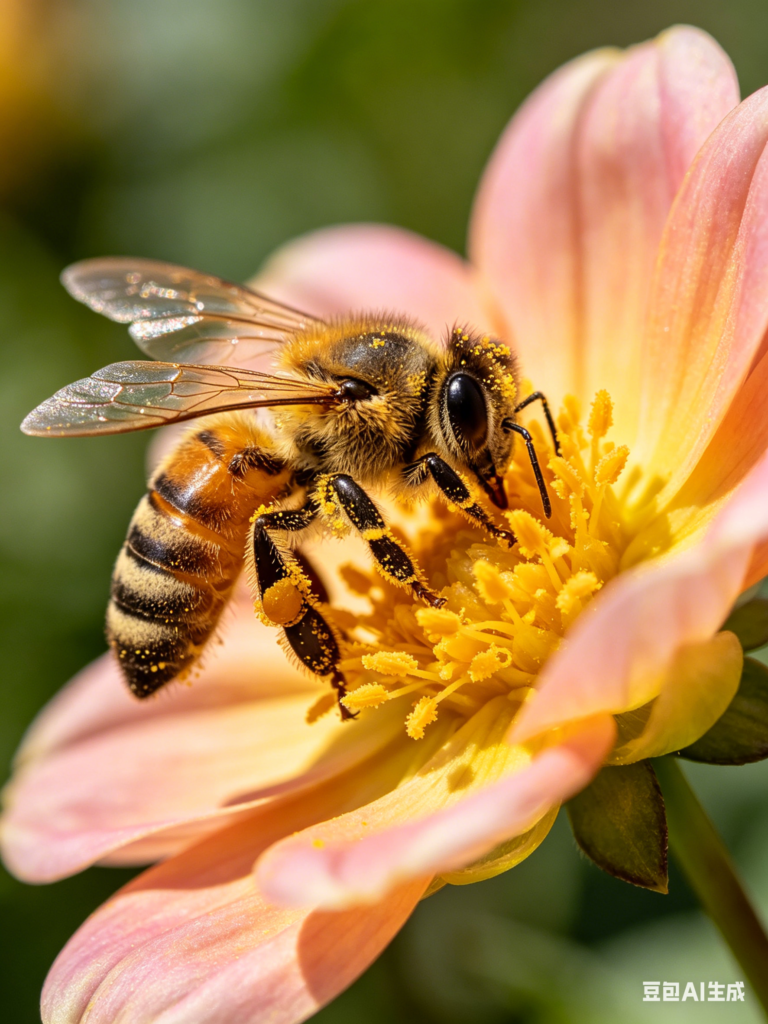
(Image 2 suggestion: Macro closeup photo – Honeybee collecting flower nectar, head deep into the flower’s blossom/stamen, capturing the very first step of honey creation, clear detailed nature shot)
At its core, honey is not just “bee sugar”—it is a meticulously crafted, concentrated natural nectar transformed by the labor of honeybees. Contrary to common misconception, bees do not make honey from pollen; pollen serves as protein-rich food for bee larvae, while honey begins with flower nectar, the thin, sugary liquid secreted by flower blossoms to attract pollinators. Forager bees venture out from the hive, sipping this nectar and storing it in a specialized “honey stomach” (a separate pouch from their digestive stomach), where they immediately add powerful, naturally produced enzymes. These enzymes start breaking down the nectar’s complex sucrose into simpler sugars: glucose and fructose, the building blocks of honey.
Back at the hive, the process becomes a collective labor of love. Forager bees pass the enzyme-rich nectar mouth-to-mouth to worker bees, further breaking down the sugars and reducing its moisture content. Then, worker bees fan the nectar relentlessly with their wings for hours, evaporating nearly all water until the liquid thickens into a dense, syrupy consistency. Once cured to perfection, bees seal the honeycomb cells with beeswax, locking away the honey in a pure, preserved state. This meticulous, multi-step process is what elevates honey from simple flower nectar to a stable, nutrient-dense sweetener—no human processing, no additives, no refinement required.
(Image 3 suggestion: Fresh raw honeycomb closeup – Glistening golden cut honeycomb, oozing raw liquid honey, pure unfiltered comb honey you can purchase commercially)
One of honey’s most astonishing traits is its eternal shelf life, a feat no man-made sweetener can match. Archaeologists have discovered perfectly edible honey in ancient Egyptian tombs and pyramids, dating back over 3,000 years, still intact and safe to consume. This longevity stems from two key factors: honey’s extremely low moisture content, which prevents bacteria, mold, and all microorganisms from growing and thriving, and the natural hydrogen peroxide produced by bee enzymes during the transformation process, acting as a natural preservative. Over time, honey may crystallize, turning from a smooth syrup into a grainy, solid substance—but this is not spoilage. Simply warming the crystallized honey gently restores its silky, liquid form, good as new, with none of its properties lost.
(Image 4 suggestion: Cozy lifestyle table shot – A classic glass ceramic honey pot with a dipper, set on a simple neutral wooden table, warm soft natural lighting, clean and aesthetic)
While honey is often lauded as a “healthy” alternative to refined sugars, it is critical to understand its true place in the spectrum of sweeteners. Unlike white sugar—whether derived from sugar beets or sugarcane, which are stripped of all nutrients during heavy processing to become pure, empty sucrose—honey retains tiny but valuable traces of antioxidants, natural enzymes, and essential minerals. It causes a gentler, slower spike in blood sugar compared to refined beet and cane sugar, making it a far more mindful choice for those seeking a sweetener. Yet honey is still a concentrated natural sugar, to be enjoyed in moderation, never a free pass for overconsumption.
In the end, honey stands apart as nature’s most exceptional sweetener. It is a product of biological precision, a link to our ancient past, and a pure, unadulterated alternative to heavily processed refined sugars. For anyone prioritizing whole, natural foods, honey is unequivocally the best sweetener available—second only to the natural sweetness of fresh, fiber-rich fruits, the purest form of sweetness we can consume.
Bonus Final Optional Closing Image (extra pick if you want one more):
Full composition shot: Jar of raw liquid honey next to pieces of honeycomb + a small blooming flower, tying together bees, flowers, and finished honey for a beautiful ending cover photo!